



Ten years ago, Health Evolution’s Confab for Advancing Women in Leadership established a space for women and executives of any gender to explore how they maintain a sense of true north in their leadership and for their organizations. Since then, Confab has grown into a community committed to fostering authentic dialogue, amplifying senior executive women’s voices on the most critical industry issues, and empowering leaders to enact bold change.
At 2025 Connect, executives gathered to commemorate this community milestone with a Big Discussion in which leaders reunited, celebrated, and reflected on the special convening the Confab community has built and become—and the critical leadership the community has advanced.
Leaders also discussed actionable priorities for the Confab community moving forward, with the goal of building on a decade of impact and advancing momentum at the intersection of progress and possibility. This landmark celebration featured candid conversations among esteemed leaders in the Confab community, including:
- Madeline Bell, CEO, Children’s Hospital of Philadelphia (CHOP)
- Alexandra Drane, Co-Founder and CEO, ARCHANGELS
- Esther Dyson, Author, “Term Limits: Time and scale in the age of AI”; Founder, Wellville
- Nzinga Harrison, MD, Co-Founder & Chief Medical Officer, Eleanor Health
- Ivor Braden Horn, MD, Advisor, Investor, & Board Member
- Julie Murchinson, Partner, Transformation Capital
- Kate Walsh, Former Massachusetts Health & Human Services Secretary
- Erin Satterwhite, CEO, Optum Insight – Provider
To kick off the celebration, Drane, Harrison, and Satterwhite set the stage for a meaningful conversation by reflecting on the power and impact of Confab. Their conversation centered around their experiences in the community, including what drew them to Confab, what they enjoy most, their most thought-provoking moments so far, and why the community is needed now more than ever.
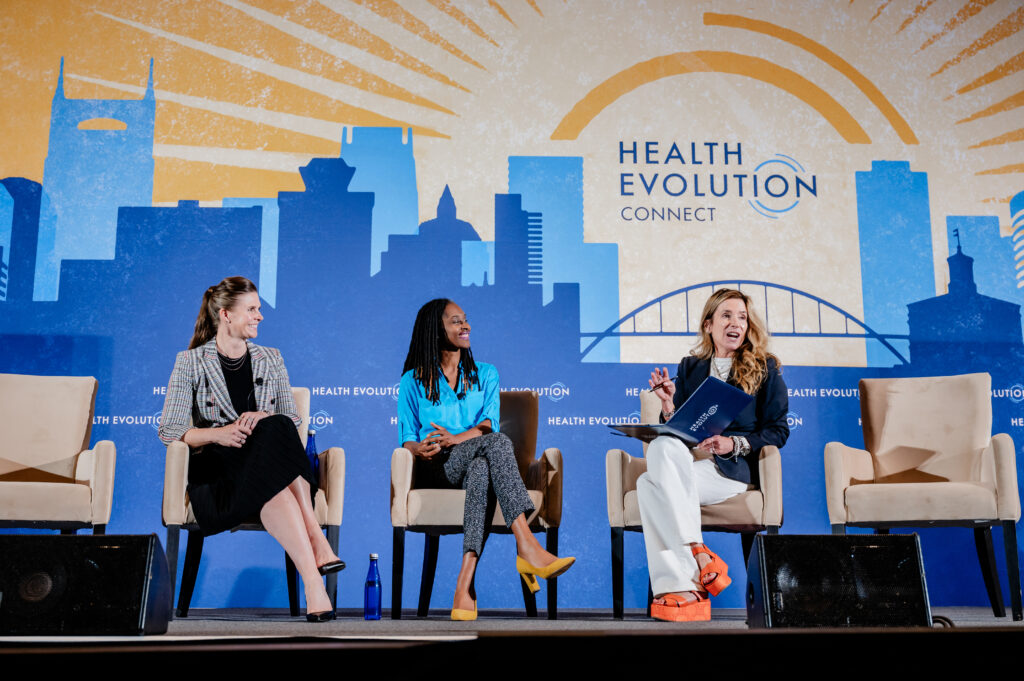
“Confab gives a stage to the topics that define our lives but fall outside the lines of how traditional health care is defined,” Drane said. “This is where executives come to openly discuss the things that are not working and unpack the real reasons why—and to take comfort in how universal those challenges are and find the opportunity in them.”
In addition to providing a space to share meaningful experiences and reflections, the Confab community acts as a support system rooted in shared empathy and transparency. “Joining Confab provided a village within the health care ecosystem that I otherwise wouldn’t have had access to,” Harrison said.
The authenticity and strong sense of community within Confab leads to thought-provoking, impactful moments. “To be surrounded by so many powerful advocates for women in leadership is really comforting,” Satterwhite said. “And the opportunity to authentically share experiences has been transformative for me.”
The discussion leaders emphasized that the Confab community is needed now more than ever. “In these rocky, uncertain, unpredictable times, a lot of us have been thinking, ‘How do we make it through?’” Harrison noted. “I think we need to change our thinking to ask, ‘How do we grab this moment and turn it into something that has a big impact for whatever is coming next? And I think this community can help us drive that mindshift.”
Next, Murchinson, who founded Confab during her tenure as Health Evolution’s CEO, moderated a discussion with Bell, Dyson, Horn, and Walsh, where they reflected on their experiences participating in the Confab community and explored pathways to build on the momentum gained over the past decade.

“We are here to celebrate everyone’s journeys, to reflect on the role of Confab, and to ask ourselves, ‘What does Confab look like in its next iteration?’ Because we need to continue this work together,” Murchinson said.
Throughout the conversation, the discussion leaders emphasized how Confab’s ongoing dialogue around key leadership themes—including culture, advocacy, transparency, authenticity, infrastructure, and accountability—plays a critical role in shaping health care leadership. They called out three enduring, core tenants of Confab that continue to drive bold leadership and change: centering the power of community as a cornerstone of Confab’s work, consistently elevating diverse voices, and striving to redefine how executives lead and manage in ways that meet both the industry’s and society’s evolving landscapes.
Looking ahead, the discussion leaders emphasized the importance of dismantling the organizational, cultural, and systemic barriers that persist for women—while actively sponsoring and uplifting the next generation of leaders.
“I think one of our roles and responsibilities as leaders now is to make sure we’re doing all we can to not turn back the clock,” Horn said. “It is our responsibility to support the next generation of women as we pass the baton. We need to be mindful of what we are leaving for them and do our best to enable them to become leaders in fullness of who they are in this moment.”
The discussion leaders explored promising opportunities to expand women’s leadership moving forward, underscoring the need to focus on community and connection.
“It’s time for us to get back to community,” Horn said. “Establishing supportive networks and fostering strong relationships are key priorities to help us get where we need to go right now.”
To maintain momentum, “we need to continue to focus on helping more women get to the C-suite and on boards,” Bell said. “This is a goal I have set my sights on—to support and empower women who are preparing to take the next step in their careers.”
Executives also need to be intentional about expanding their reach to a wider array of emerging leaders, the discussion leaders noted. “As leaders, we need to make sure we’re widening the group we’re selecting from and make sure we’re giving people equal chances,” Dyson said.
“I think we have to take bets on people,” Walsh echoed. “We need to be willing to invest in individuals who may not yet have all the experience or knowledge for the role but show strong potential to grow into it.”
The discussion leaders applauded the Confab community for investing in and building up women—and they stressed it is imperative for Confab to continue that momentum as the health care industry evolves. “Women are resilient,” Dyson said. “They are tough. They walk through barriers, they make things happen, and they uphold the community.”
“We have generations of leaders coming behind us who have not had the benefit of having the kinds of conversations and connections we have within the Confab community,” Murchinson said. “We need to continue to give at that level.”
Following the Big Discussion, the Confab community continued the conversation over a special “Get Real” celebration dinner.
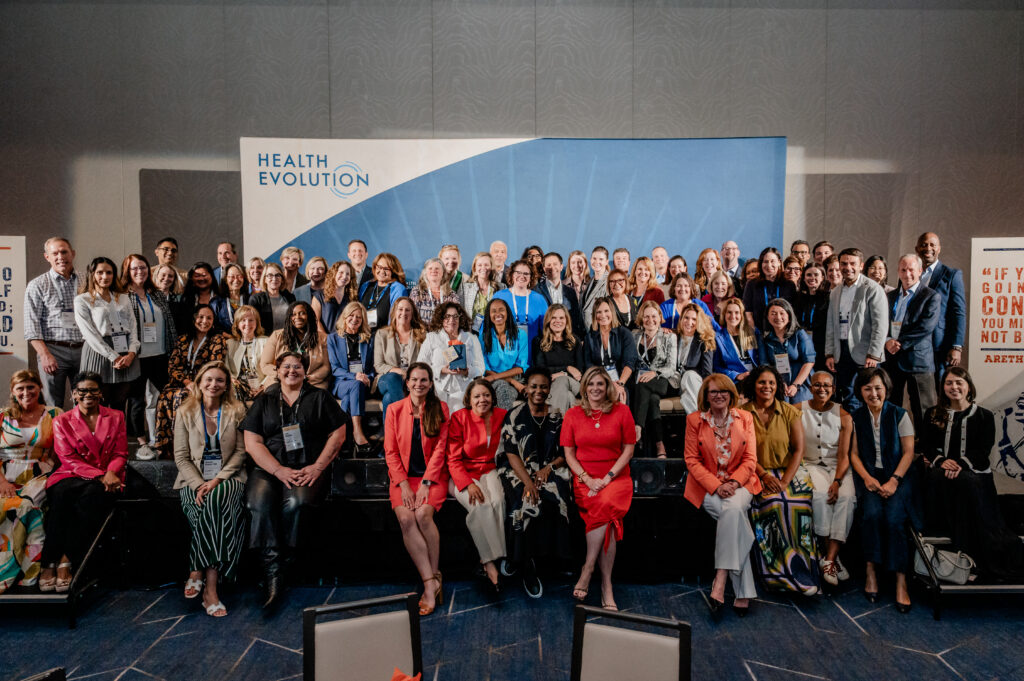
The evening provided community members with a space to reflect, reconnect, and recommit to the future they want to build together. Most critically, participants further explored the direction forward; assessed the current pulse of their collective strategy, ambition, and action; and considered how to harness the momentum of that milestone moment to boldly shape what comes next.