

Health care leaders have a critical mandate to inflect meaningful change in the communities they serve, requiring bold action, active engagement, and genuine partnership. When leaders shape initiatives around what communities truly need, they can build trust and foster lasting resilience.
At 2025 Health Evolution Connect, luminary executives in the industry shared their personal lessons on embodying bold leadership and partnering with communities to drive meaningful impact. Across multiple main stage conversations, our community learned insights first-hand from groundbreaking leaders, including:
- Marty Bonick, President and CEO, Ardent Health Services
- David Brailer, MD, PhD, Founder and Chairman, Health Evolution
- Gregory E. Deavens, President & CEO, Independence Health Group
- Michael Dowling, CEO Emeritus, Northwell Health
- Pat Geraghty, Former President & CEO, Florida Blue & GuideWell Mutual
- Terry Gilliland, MD, CEO, Geisinger
- Patrice Harris, MD, Co-Founder and CEO, eMed; former President, American Medical Association
- Sarah Iselin, President and CEO, Blue Cross Blue Shield of Massachusetts
- Omar Lateef, DO, President & CEO, Rush University System for Health and Rush University Medical Center
- Priya Singhal, MD, Head of Development, Biogen
Read on for their insights on how bold leadership can inspire trust and drive partnerships that build resilient communities.
Restoring Consumer Trust: Confronting Health Care’s Crisis in Confidence
With consumer trust in U.S. health institutions at an all-time low, and frustration with incumbent health care systems at an all-time high, leaders must prioritize restoring trust as a top imperative. In a Big Discussion at 2025 Connect, Deavens, Geraghty, Lateef, and Singhal explored how cross-industry executives can build trust and foster meaningful relationships with the communities they serve by addressing consumer pain points, serving with empathy, instilling accountability, and uniting around a shared purpose to confront behaviors that erode public trust.
The discussion leaders noted that while establishing trust requires significant time and effort, trust can erode very quickly. “Trustworthiness has to be earned,” Singhal said. “It needs to be consistent, it needs to be authentic, and it needs to be persistent.”
To build trust with the communities they serve, leaders must prioritize building and advancing meaningful, long-term relationships with community members and organizations. “When you get to know the community, you can start to build relationships with the neighborhood, and then build a sense of community trust and partnership that can help guide real, meaningful change,” Lateef said.
Notable progress happens when leaders listen to the communities they serve, identify their priorities, and design and support community-driven solutions. “When you enter a community, you can’t presume to have the right answers,” Geraghty said. “You have to listen with humility and design solutions that allow the community to be in charge with your support.”
Singhal agreed, adding, “This isn’t about telling the community, ‘This is what we think is good for them’.” She explained, “It’s about co-development. The community has to come up with the solutions, and we’ve got to create the platforms.”
However, it is not enough to simply deploy community-driven solutions. Lasting impact requires ongoing community engagement, and executives must commit to staying present, listening, and leading with consistency, the discussion leaders said.
“We have to understand what people want, but we also have to make sure that we’re working together to drive outcomes that meet their needs and expectations. And we have to keep our finger on the pulse of those expectations because they will evolve over time,” Deavens noted.
“We have to keep reengaging and building trust,” Geraghty said. “And I think without authenticity and transparency and consistency, it’s going to be hard. It’s not an overnight success,” he added.
The discussion leaders acknowledged that restoring trust is particularly challenging in health care because of unprecedented levels of mistrust and misinformation. But those challenges mean it is more important than ever that leaders prioritize bold action to rebuild community and consumer relationships, they contended.
“This moment in time is so important because when things are challenging, it’s probably the most vital time to double down,” Lateef said.
Despite significant headwinds, the discussion leaders said they are optimistic executives are equipped to drive progress in the communities they serve. “Many of the issues we’re facing in health care—particularly at the community level—are longstanding,” Deavens said. “But I think the capabilities and innovations we have at our disposal enable us to drive progress on some of these longstanding challenges.”
Ultimately, building lasting, trustworthy relationships that truly make an impact requires collective action, the discussion leaders said. They especially underscored the need for shared accountability across the ecosystem to confront behaviors that erode trust and to restore trust in health care.
“No single institution is going to solve the problems in health care by themselves. If we break down the barriers and the fragmentation between us, we can make a bigger impact,” Lateef urged.
“If we just defend our own corners, stay fragmented, and stay siloed, we will fail patients and communities,” Singhal asserted, adding, “So, we need to come together.”
Leading Despite Uncertainty: Inspiring Bold Action in an Era of Enduring Change
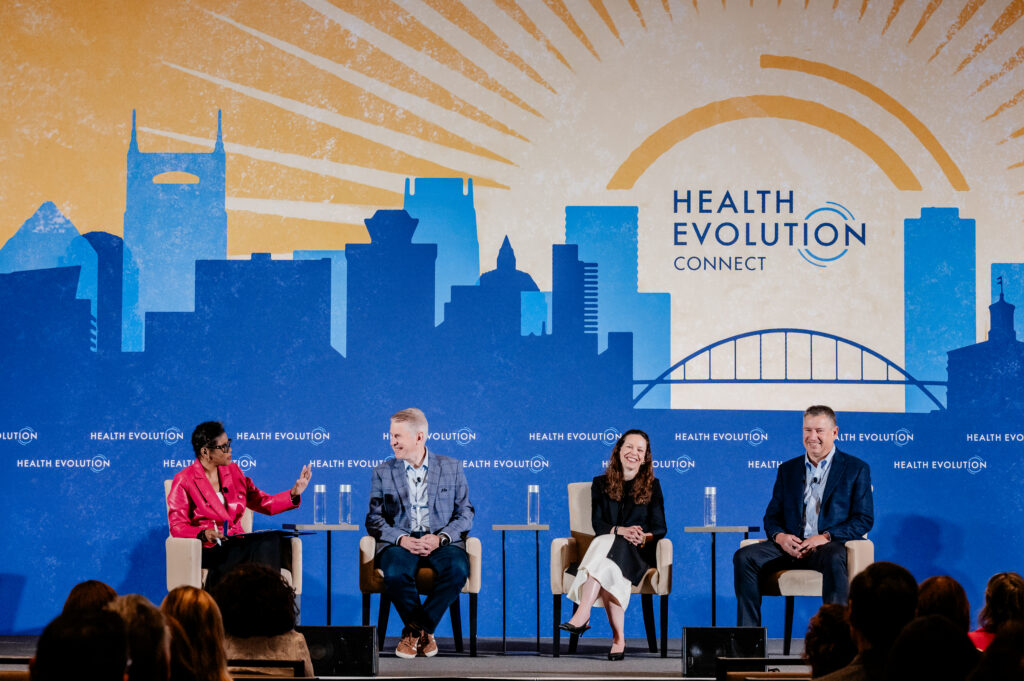
While industry leaders recognize the need for bold change to restore public trust in health care, they acknowledge it can be difficult to launch new initiatives while also navigating significant uncertainty stemming from major policy shifts, heightened industry scrutiny, workforce strains, escalating economic pressures, and the vastly evolving innovation landscape driven by advancements in AI. But in a separate Big Discussion, Harris, Bonick, Gilliland, and Iselin explained how fostering community engagement is essential for executives to effectively lead their organizations through this tumultuous environment.
How executives can embody bold leadership amid uncertainty
According to the discussion leaders, in times of uncertainty, executives must set clear priorities for their organizations, craft strategies that address both immediate and long-term challenges, and be willing to take calculated risks to drive progress. Executives also must embrace and exemplify bold, collaborative, and trustworthy leadership, they charged.
“It’s a challenging time,” Iselin said, “But I think this is the exact right time for us to have these conversations and to determine how to come together as a community to get to a better place.”
The discussion leaders emphasized the importance of taking calculated risks to drive transformation. Meaningful progress hinges on leaders’ willingness to embrace changes that may feel uncomfortable or uncertain but are necessary to benefit their organizations and the people they serve.
“I think it’s about being thoughtful, taking calculated risks, and making bets that the future is going to look different,” Bonick said. “If we don’t start embracing that, we’re going to fall behind. We need to adopt thoughtful risk tolerance as we think about how we strategize and plan,” he contended.
To drive this shift, executives must anchor their strategies in clear priorities, foster community engagement, and be transparent with their organizations and communities, the discussion leaders said. “Our goal is to identify prudent risks and help people feel confident embracing changes that are going to help us get to a different place,” Gilliland explained.
To do so, executives must create open lines of communication that allow them to listen and transparently respond to their staff’s and communities’ needs, the discussion leaders noted.
“In this moment, we all have to listen harder than ever before,” Iselin said. “I think it’s also important to note that trust is built when you speak truth. The combination of listening intently and being transparent about what we can and can’t do builds trust,” she continued.
Leaders also must be willing to challenge their own assumptions and commit to supporting communities long term. “It requires listening to communities and then acting on what we hear and not just looking for that confirmation bias of what we want to do,” Bonick said, adding, “And we have to be there for our communities consistently—not just in times of crisis.”
Ultimately, “it’s about building up the community together and backing those efforts with credibility, resources, energy, and commitment across all levels of the organization to positively impact those we serve,” Gilliland said. “It really is a credibility journey,” he noted.
Harris agreed. “At the end of the day, we’re the folks at the very end of the line, and those are our patients and communities,” she said. “We need to determine how CEOs can build more resilient relationships with the communities they serve—especially when those communities are facing the same chaos, volatility, uncertainty, and worry.”
Fireside Chat with Michael Dowling
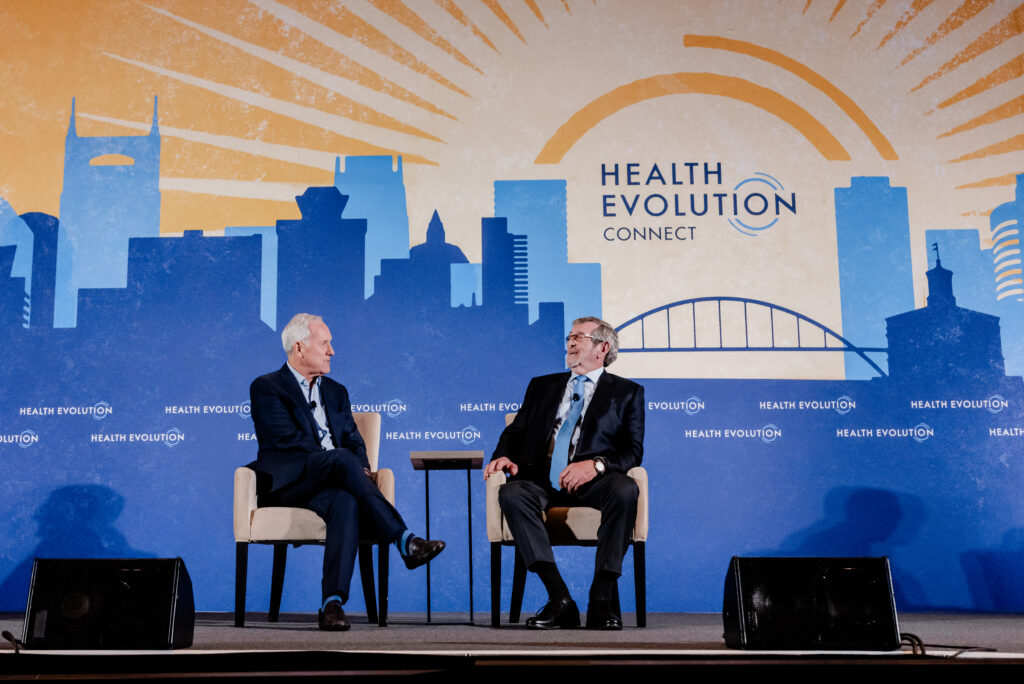
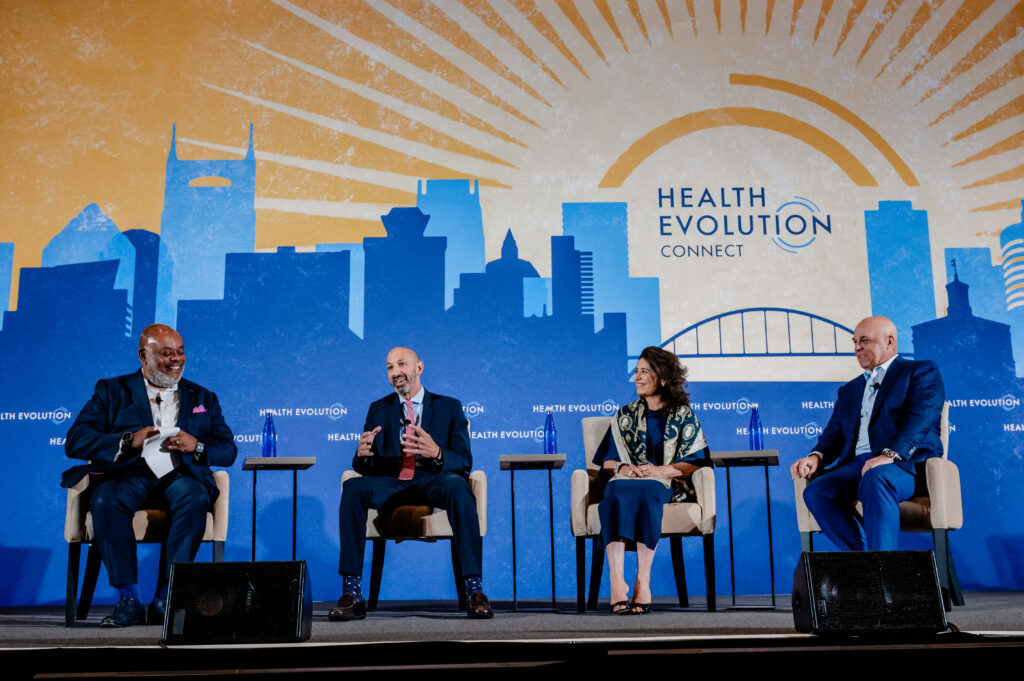
Bold leadership also requires courage rooted in compassion. For health care executives, that means leading with empathy and a deep sense of responsibility for the patients and communities they serve to foster trust, build resilience, and set the foundation for lasting impact, according to Brailer and Dowling, who sat down for a separate fireside chat. During their conversation, Brailer and Dowling challenged health care executives to rethink how they lead and operate in today’s complex environment.
Leaders bring diverse backgrounds and perspectives to the table, and the insights and lessons they’ve gained from lived experiences should inspire them to lead with authenticity, humility, and empathy, Brailer and Dowling said.
Dowling shared that the values he learned growing up poor in rural Ireland in a thatched-roof cottage with a dirt floor and no electricity or indoor plumbing helped shape him into the leader he is today. “When you grow up in an environment like that, it teaches you a lot about life and provides lessons that are very important in leadership positions,” Dowling said. “It teaches you how to be resilient, how to deal with inconvenience, how to navigate difficult circumstances, and how to take risks—all of which are key components of leadership.”
Leadership in health care is about more than operational excellence; it is about driving meaningful impact for those you serve, Dowling said. He encouraged health care leaders to broaden their definition of “health” and the scope of their responsibilities to champion initiatives that advance education and research, strengthen community support, address social determinants of health, elevate equity and diversity, and confront public health crises like gun violence, inadequate housing, and food insecurity.
“Health goes beyond medical care delivery. Health is affected by everything—how we relate to one another, how we work together, how we respect one another, and how we promote the values of decency, respect, integrity, truth, and honesty. If you’re in a community where you champion those kinds of values, you improve health,” Dowling said.
Brailer and Dowling acknowledged that as executives strive to embody bold leadership and keep patients and communities at the center, in the current environment, they also face growing waves of disruptions that make their mission increasingly complex. “We’re facing enormous disruptions, including Medicaid cuts, shifts in public policy, changes in the research stream, and a high level of uncertainty,” Brailer noted.
Bold leadership will continue to be critical as executives navigate industry headwinds, Brailer and Dowling said. “Going forward, I think one of the key ingredients of health care leadership is going to be courage in protecting public health,” Dowling charged, adding, “We need to be able to stand up for what we believe, address the challenges we’re facing, and move forward in a positive, optimistic way.”