

Amid shifts in health policy and government investment, the United States’ already strained public health system is approaching a critical breaking point. This pivotal moment poses immense challenges—but it also presents a rare opportunity to drive wholesale change.
At Health Evolution’s 2026 Summit, our community of bold, cross-industry leaders joined together to identify gaps and determine how to better harness existing expertise and infrastructure to strengthen public health. Executives explored the path forward with renowned leaders in public health, including:
- Bechara Choucair, MD, EVP & Chief Health Officer, Kaiser Permanente
- Mandy Cohen, MD, National Advisor, Manatt Health; former CDC Director; former Secretary, North Carolina Department of Health and Human Services
- Meena Seshamani, MD, PhD, Secretary, Maryland Department of Health; former Deputy Administrator & Director of Center for Medicare, Centers for Medicare & Medicaid Services
Read on to discover how leaders are meeting this moment to drive meaningful transformation and strengthen public health.
Public Health on the Brink: How Do We Fill the Gaps as Priorities Shift?
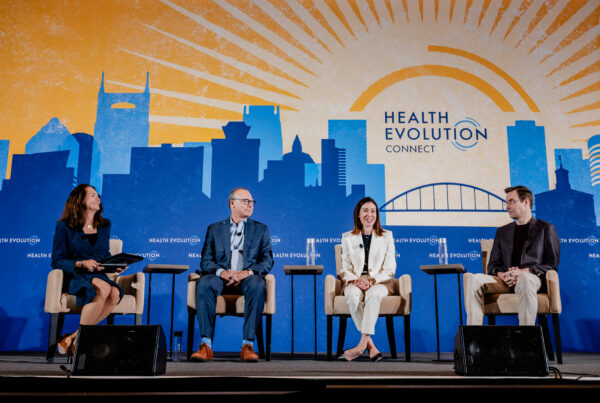
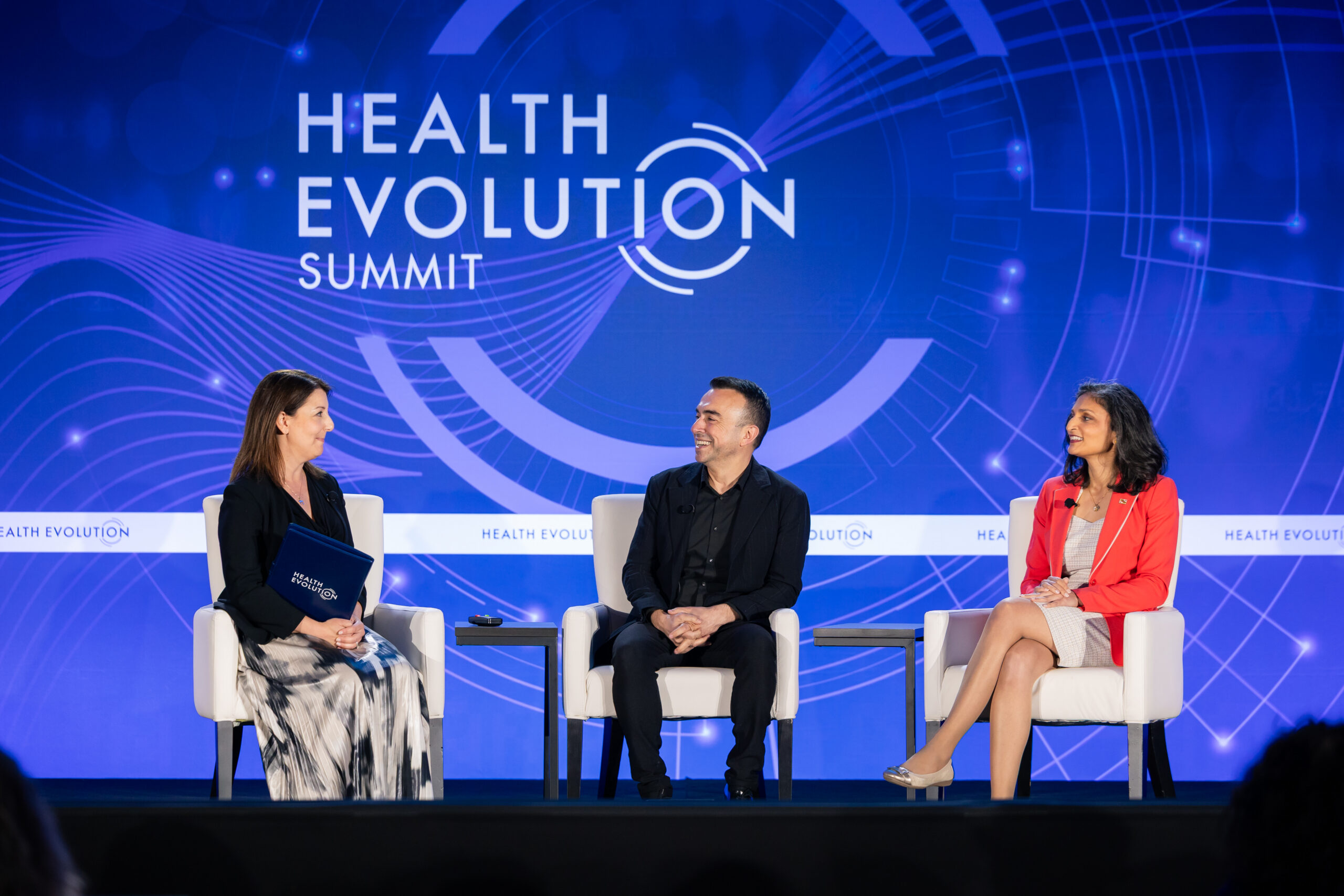
In a Summit Big Discussion, Cohen, Seshamani, and Choucair unpacked how shifting government policies and priorities are intensifying challenges in the public health system and creating new imperatives for cross-industry collaboration. Their conversation explored who is accountable for protecting public health, how all sectors must share responsibility, and the most promising opportunities for coordinated action to strengthen the system.
Cohen opened the conversation by acknowledging our public health system is under significant strain—fueled by workforce disruptions, funding gaps, delayed data modernization, declining trust, and the unraveling of evidence-based processes. “What concerns me is not any one thing,” Cohen said. “To me, the combination of all these challenges together signals that public health is in crisis.”
The discussion leaders underscored this moment presents an opportunity to strengthen public health by fostering increased collaboration, addressing challenges driven by policy and priority shifts, and dismantling longstanding silos and fragmentation in the system. “I agree that we are in crisis, but I believe every crisis presents opportunities,” Seshamani said.
Cohen explained that disintegration between public health and care delivery systems is a key obstacle to progress. “We know that public health has been too siloed from the health care delivery system,” she said. “We discuss the same concepts, yet we are using different tools and different languages. We’re not working together. We’ve been working to incrementally change a fundamentally fragmented system.”
The discussion leaders emphasized the importance of building bridges and ongoing collaboration between the two disciplines to effectively navigate this crisis and advance public health. Otherwise, all organizations throughout the health care ecosystem will feel the effects of public health declines.
“When you have an under-resourced public health system or when things break apart in the public health space, the ramification of that is felt everywhere. You’ll feel it in the health care delivery system, you’ll feel it as a payer or a health system, you’ll feel it as an employer, you’ll feel it as a community-based organization,” Choucair said.
But to drive meaningful collaboration and progress, the discussion leaders underscored the need for financial alignment and incentives that reward outcomes across the health care ecosystem.
“We all know that our current health care delivery system in the United States is not sustainable. We invest so much money, but we don’t see the outcomes we want,” Choucair noted. “We must think about health as a continuum—and that includes public health, what happens in communities, the health care delivery systems, the payers—if we don’t work together to create a well-coordinated ecosystem, there is no way we’re going to create the value we want.”
As an example for transformation, Seshamani outlined some of the work Maryland has done to fill gaps and create incentives and partnerships to advance public health. Under Maryland’s all-payer model, hospitals receive reimbursement through global budgets that seek to prioritize quality and patient outcomes, rather than on a fee-for-service basis. According to Seshamani, this creates “a direct link between health care delivery and public health that helps keep people healthy in their communities and out of the hospital.”
In addition to addressing silos between health care delivery and public health, Seshamani highlighted the state’s efforts to break down fragmentation between public health and the rest of Maryland’s economic, societal, and civic services. For instance, “not only are we bringing public health and health care delivery together, but we’re also linking that with our initiatives to combat child poverty,” Seshamani said.
Bridging gaps and building a better system ultimately requires bold leadership and strong partnerships, the discussion leaders emphasized. “Bringing together leaders that are thinking across silos is so critical,” Cohen said.
As leaders work to close the gap between public health and health care delivery, they must leverage tools like AI to accelerate progress. The discussion leaders explored promising use cases for AI, including care navigation, patient support and engagement, data analysis, and oversight and disease surveillance.
Moving Public Health Beyond the Brink: Building Our Collective Response
Following the Big Discussion with Cohen, Seshamani, and Choucair, Health Evolution members participated in interactive, small-group workshops to identify how leaders can collectively safeguard public health, clarify roles and responsibilities, and prioritize the most urgent gaps.
During these conversations, leaders acknowledged the gravity of the moment and moved toward action by aligning on shared responsibilities, pinpointing opportunities for collaboration, and outlining concrete next steps to reinforce the currently fractured public health ecosystem.
Members began by identifying urgent gaps that undermine our public health system and hinder efforts to drive meaningful progress. They pointed to insufficient and siloed data; outdated infrastructure across workforce, technology, and processes; and persistent funding challenges that create instability and misaligned incentives.
Members also underscored America’s ongoing decline in public trust in traditional health care institutions, which is exacerbated by the rapid spread of misinformation and inadequate patient and community engagement. Further, they highlighted critical access gaps, including rural health system closures, pharmacy deserts, and a lack of access to healthy food. Together, these gaps paint a picture of a system on the brink—and an opportunity for cross-industry leaders to join together and drive transformation.
After identifying the most pressing gaps facing public health, members explored opportunities to build collective action and shared responsibility. To start, leaders said strengthening trust through deeper community engagement and partnerships with community-based organizations (CBOs) must be a core priority. They highlighted the value of cross‑sector collaboration to scale effective solutions by bringing together key stakeholders such as health systems, public health agencies, CBOs, and private‑sector innovators.
Members also stressed the importance of building coordinated efforts to counter misinformation and ensure patients and communities receive timely, credible guidance.
In addition, leaders discussed the untapped potential of leveraging AI to modernize data infrastructure and improve data sharing, enhance surveillance, streamline operations, and support more personalized outreach.
Members concluded the workshops by building collective action within Health Evolution’s cross-industry community of influential executives. Leaders volunteered to collaborate on continued efforts to strengthen public health by addressing the most pressing gaps and opportunities they identified during their conversations.